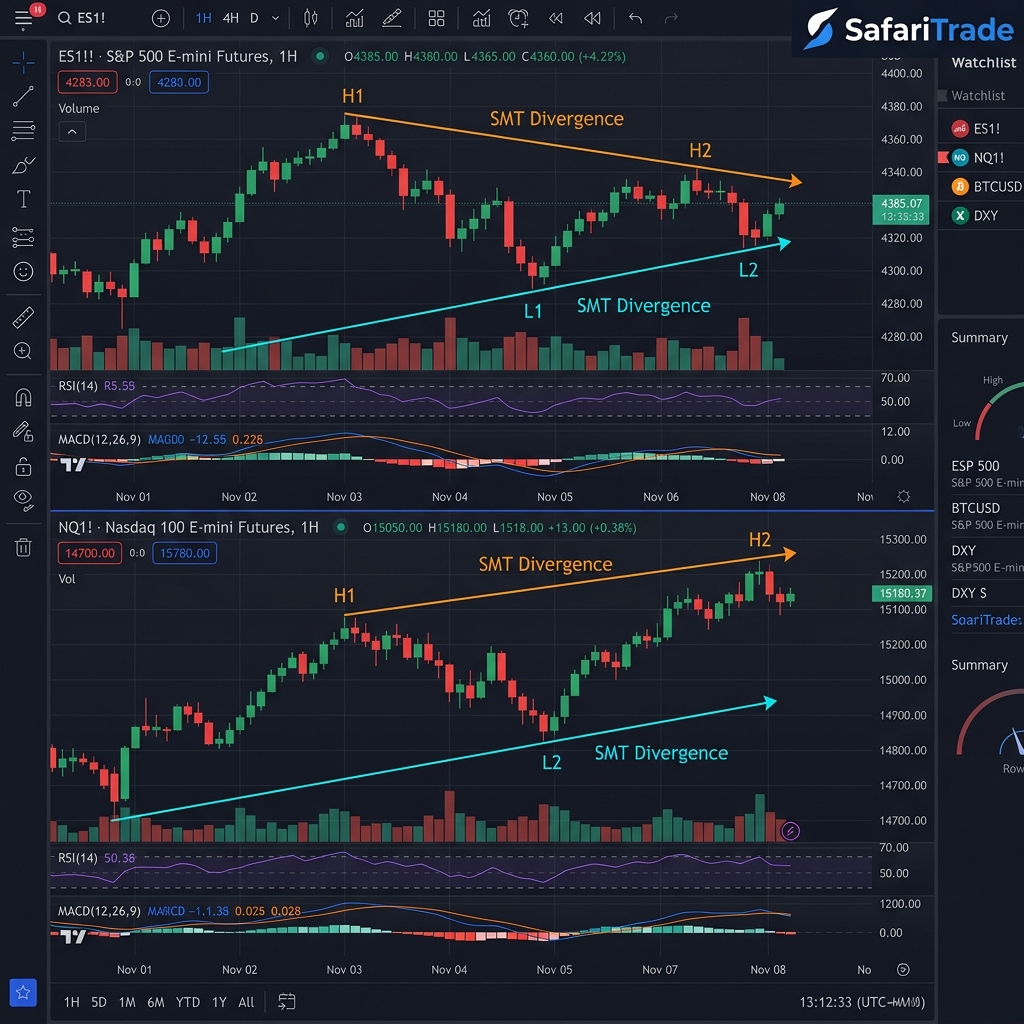
Liquidity is the lifeblood of the financial markets. Every buy order requires a sell order to execute, and vice versa. Institutions and market-making algorithms cannot enter massive positions without finding an equal and opposite amount of liquidity to fill their orders. Understanding where these liquidity pools reside is key to trading in sync with smart money.
What is a Liquidity Sweep?
A liquidity sweep occurs when price aggressively breaches a key level where protective stop-loss orders are concentrated, triggers those stops, and then immediately reverses. These areas are known as liquidity pools.
For retail traders, these stops are protective exit orders. For institutional market makers, these stops represent the necessary volume to enter their own massive long or short positions. The most common liquidity pools are:
- Buy-Side Liquidity (BSL): Located above previous swing highs, session highs (Asia, London, New York), and daily/weekly highs. Buy stop-losses are triggered as market buy orders, allowing institutions to sell into them.
- Sell-Side Liquidity (SSL): Located below previous swing lows, session lows, and daily/weekly lows. Sell stop-losses are triggered as market sell orders, allowing institutions to buy from them.
Identifying High-Probability Sweeps
Not all breaches of swing highs or lows are sweeps; some turn into real breakouts. High-probability sweeps have distinct characteristics:
- Time of Day: Sweeps are highly effective when they occur inside algorithmic time windows (Killzones). An Asia high swept during the London open, or a London low swept during the New York open, are high-probability setups.
- Displacement: Immediately after sweeping the level, price should quickly reject and close back inside the previous range. A slow, grinding candle close above a high is a breakout; a sharp wick that closes below the high is a sweep.
- Market Structure Shift (MSS): Following a sweep, look for a displacement candle that breaks a local swing low (for a bearish setup) or swing high (for a bullish setup) on a lower timeframe.
Pro Tip: Always trade in the direction of the higher timeframe bias. If the daily trend is bullish, look for sweeps of Sell-Side Liquidity (SSL) to go long. Avoid trading counter-trend sweeps unless they occur at key daily/weekly HTF levels.